August 18th, 2026
Stocky is shutting down: what Shopify sellers should do next

Chew Lim
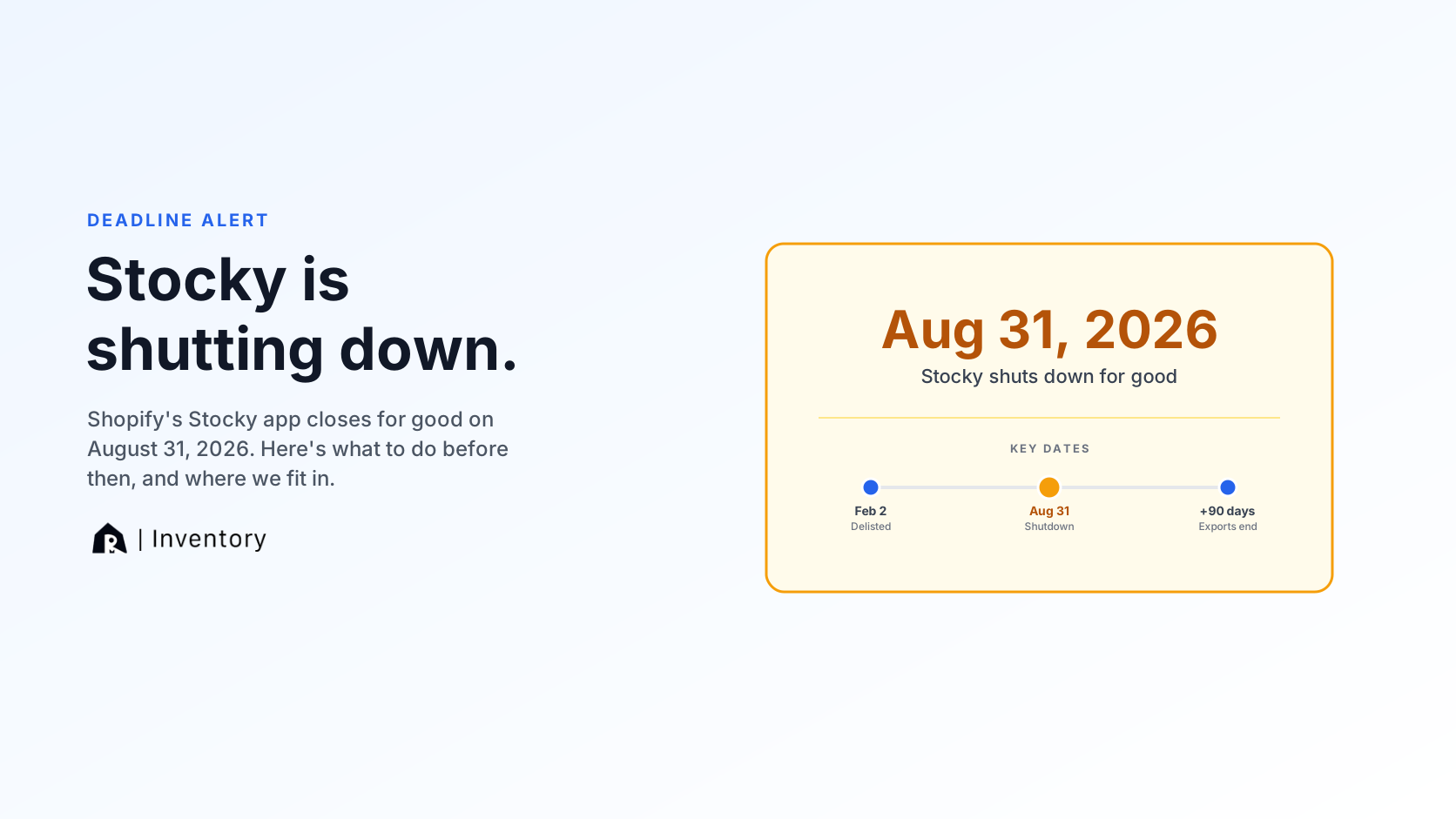
Stocky is shutting down on August 31, 2026
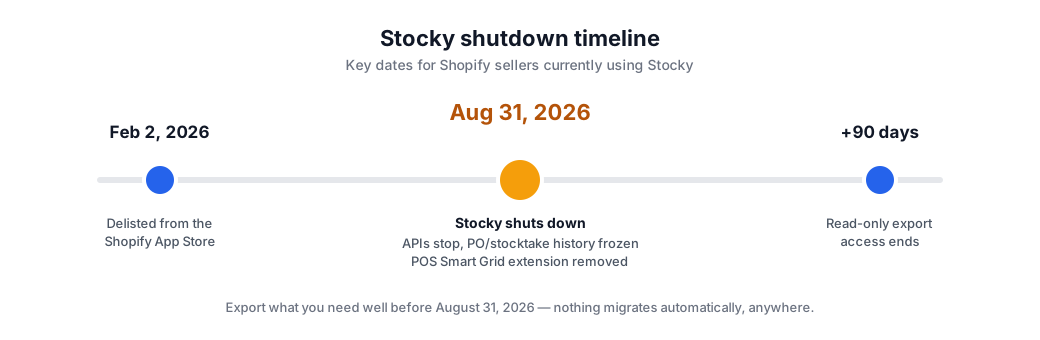
Shopify has confirmed that Stocky won't be available after August 31, 2026. It was already delisted from the Shopify App Store on February 2, 2026, so no new merchants can install it. If you're currently running purchase orders and stock counts through Stocky, that workflow has a hard stop date.
What that actually means for your data:
- Historical records don't move automatically. Old purchase orders and stocktakes stay in Stocky. Shopify says you'll have read-only export access for at least 90 days after the deadline, but nothing migrates into Shopify's native inventory tools on its own.
- Supplier relationships can't be exported at all. If you've built up a supplier list in Stocky, that information doesn't come out in any exportable form.
- Stocky's APIs stop working on August 31, 2026. Any third-party integration built against Stocky breaks on that date.
- The POS Smart Grid extension goes away too, so if you were using Stocky at the register, that workflow needs replacing as well.
Shopify's own advice: export everything you'll need before the deadline, close out open purchase orders about two weeks before August 31, and start getting your team used to whatever you're moving to.
Why Shopify is retiring it
Shopify's stated direction is to step back from owning standalone operational tools and focus on the core commerce platform, the same reasoning it gave when it retired Shopify Fulfillment Network. Stocky, specifically, was built for a simpler, single-channel version of retail: one store, one till, one set of stock levels.
That's increasingly not how sellers operate. A tool that only sees one channel can only ever tell you what's happening in that channel, it can't see stock committed on eBay, or a marketplace order about to eat into what you show as available on Shopify. If you're only replacing what Stocky did for Shopify alone, you're rebuilding the same blind spot.
Where Ricemill | Inventory picks up
Ricemill | Inventory isn't a Shopify POS add-on, it's a standalone inventory and purchasing app that connects to Shopify and eBay, and keeps stock levels in sync across both in real time. That's relevant here specifically because it means a "replacement" doesn't have to mean a Shopify-only one.
Purchase orders, the core of what most sellers used Stocky for:
- Create a purchase order against a supplier and a destination location, look up items by SKU or name, and set quantity and cost per line.
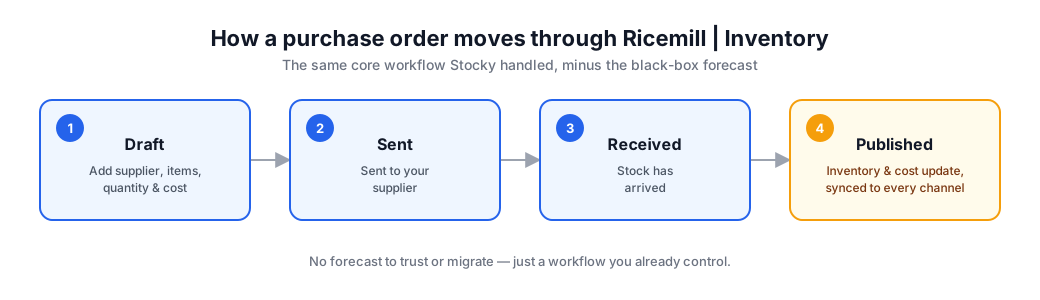
- Move it through Draft → Sent → Received → Published. Publishing a purchase order updates inventory quantity and cost automatically, and syncs the change to whichever sales channel that stock belongs to.
- Multi-currency purchase orders convert to AUD with an exchange rate you set, useful if you're ordering from overseas suppliers.
Automatic replenishment, without a black-box forecast:
Stocky's forecasting suggested what to reorder based on sales history. Ricemill's approach is different, and worth knowing before you switch: instead of a sales-velocity model, you set up a plain-language Rule once (for example, "order enough to cover outstanding preorders" or "never order more than a set cap"), and run it from More actions → Apply rule on any draft purchase order. It solves the same everyday problem, closing the gap between what's promised and what's in stock, without asking you to trust an opaque forecast or do the maths by hand.
Stock that stays accurate across channels, not just one:
Inventory changes sync automatically between Shopify, eBay and Ricemill, so a sale on either channel is reflected everywhere else without a manual reconcile. You also get a full stock movement history for every adjustment, purchase and sale, plus batch CSV updates when you need to correct quantities in bulk.
Bundles, if part of your catalogue is kitted or built from shared parts, Ricemill lets a single stocked component be reused across multiple bundle products, with buildable quantity calculated from that shared stock.
What's different, so you're not caught out
To be upfront about the parts that aren't a like-for-like swap:
- Ricemill isn't a Shopify POS Pro register extension. If the specific thing you relied on was Stocky inside the physical checkout flow (Smart Grid), that in-person piece isn't what Ricemill replaces, Ricemill is the back-office inventory and purchasing layer, not point-of-sale hardware software.
- Replenishment is rule-based, not a sales-velocity forecast. Rules cover the common cases well (preorder gaps, order caps) but they're not a drop-in for a demand-forecasting algorithm, you're describing the fix, not training a model.
- Your Stocky history doesn't carry over here either. Old purchase orders, stocktakes and supplier data won't import automatically into Ricemill any more than they will into Shopify's native tools. Export what you need from Stocky before August 31, 2026 regardless of where you land.
Switching before the deadline
- Export your Stocky data now: completed purchase orders, stocktake history, cost records, and your supplier list (supplier info can't be pulled out later).
- Close out open purchase orders in Stocky about two weeks before August 31, 2026, as Shopify recommends.
- Connect Ricemill | Inventory to Shopify, and to eBay if you sell there too, so stock stays in sync across every channel from day one.
- Recreate any open purchase orders you still need in Ricemill, so nothing falls through the gap between the two systems.
- Set up a Rule for whatever reorder calculation you were doing by hand or leaning on Stocky's suggestions for.
Give it a try
Install Ricemill | Inventory and start a 30-day free trial. Connect Shopify (and eBay, if it applies), bring your open purchase orders across, and set up your first Rule before Stocky's August 31, 2026 shutdown catches you without a working replenishment process.